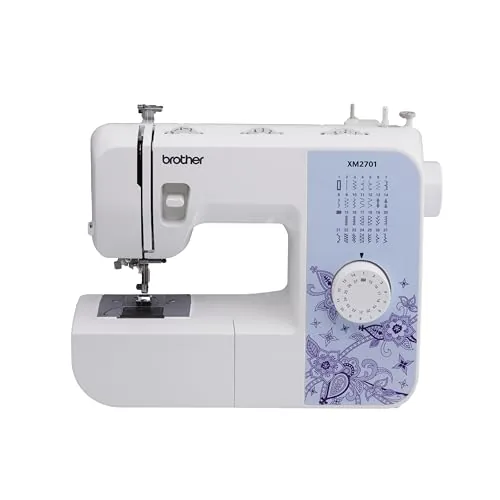
A good sewing machine keeps stitch length steady when fabric changes speed, and it feeds layers without pushing them sideways. A bad one hides weak motor control behind many decorative stitches, then skips, puckers, or stalls at seams.
What Actually Separates a Good Sewing Machine From a Bad One
| What to check | What good looks like | Why it matters |
|---|---|---|
| Stitch Consistency | Look for straight stitch length variation under 0.2 mm across medium cotton, denim, and jersey at normal speed. | Larger variation makes seams wobble and causes puckering on thin knit or shirt seams. |
| Motor Control | Choose a machine that starts at a low speed and reaches about 800 stitches per minute without surging on denim seams. | Poor speed control makes corners and thick seams hard to align, and it can break needles. |
| Feed System | Look for a seven-point drop feed or box feed with a clear drop-feed lever for quilting and even feeding of three cotton layers. | Weak feed shifts layers, creates tucks under quilts, and makes matching seam allowances inaccurate. |
| Internal Frame | Prefer a metal frame and metal race area over plastic housings when sewing garments or quilts several hours a week. | Flexible housings amplify vibration, loosen stitch timing, and make needle alignment drift. |
| Accessory Cost | Budget at least $40 to $120 for bobbins, needles, feet, and a walking foot if not included. | Missing feet or proprietary bobbins can make quilting, zippers, or buttonholes impossible without another purchase. |
Mechanical Versus Computerized Controls
Mechanical machines use dials and levers for stitch selection, while computerized machines use buttons and often add needle up/down, speed limiting, and automatic thread cutting. For garments and basic quilting, the core requirement is the same: a steady straight stitch and a clean zigzag at useful widths. A simple mechanical model can meet that requirement if it has firm tension control and a smooth speed range. Computerized models add convenience, but their value depends on whether the extra functions solve a real problem. Needle up/down helps when pivoting quilt blocks. Speed limiting helps beginners keep control on curves. Automatic thread cutting saves time but adds service complexity. Look past the stitch count number. A machine with 12 stitch patterns that sews evenly on denim and jersey is more useful than a machine with 200 patterns that cannot hold a straight line on two layers of cotton. In our beginner stitch testing, the difference between acceptable and frustrating machines usually appeared during slow stitching across a cross seam, not during decorative stitching. If you mainly plan to repair hems, make simple garments, or practice quilting, choose consistent feeding and clear tension marking over a large stitch menu.
Matching Feed And Throat Space To Fabric
Feed determines how evenly fabric moves under the needle, and throat space determines how much fabric can sit to the right of the needle. For garment sewing, a standard rectangular bed and a drop feed with enough tooth exposure are usually enough. The test is whether two layers of cotton poplin stay aligned without one layer creeping forward. For quilts, a wider table or extension surface helps support the roll, and a walking foot or integrated even feed helps keep batting and backing from shifting. Throat space matters most when rolling a quilt for free motion work or sewing large panels. A machine with 6 inches of space to the right of the needle gives limited room for a throw quilt, while 8 to 11 inches makes rolling and pivoting less awkward. Seam finishing is a separate need. A serger for seam finishing trims and encloses edges quickly, but it does not replace the sewing machine for topstitching, buttonholes, zippers, or quilt assembly. If you sew mostly knits, prioritize consistent stretch stitches and stable feed over large throat space. If you sew woven quilts, prioritize even feed, stable straight stitch, and a flat working surface.
Hidden Costs In Feet And Bobbins
The sticker price of a sewing machine rarely includes everything needed for quilting, garment construction, or machine embroidery. A walking foot can be essential for feeding quilt layers evenly, and a zipper foot or invisible zipper foot is needed for many garment steps. Buttonhole style matters too: a one-step buttonhole is faster, but a four-step buttonhole can still produce a clean result if the machine feeds evenly. Bobbins are a common hidden constraint. Some machines use common class 15 or 66 style bobbins, while others require a specific plastic or metal type that is harder to source. Using the wrong bobbin shape can cause tension problems and may jam inside the hook. Check whether the machine includes the feet you will actually use, and price those parts separately if they are missing. Cutting accuracy also affects how the machine performs after sewing begins. Dull or poorly balanced fabric cutting tools make quilt pieces drift, which then forces the sewing machine to compensate for inaccurate seam allowances. Budget for needles, thread, bobbins, and a basic maintenance kit before assuming a low machine price is a bargain.
When To Spend More On Framing
Spending more should buy better stability, not more decorative stitches. A heavier internal frame, metal hook area, and firm exterior panels reduce vibration when sewing denim, canvas, or multiple quilt layers. That stability keeps needle penetration consistent and helps the fabric feed without bouncing. Light machines are easier to carry to classes, but they can shift on the table and make precise topstitching harder. If the machine will stay in one place, weight is often an advantage. Listen for changes in sound when the needle enters thick seams. A machine that labors or slows sharply may not have enough torque for frequent denim, upholstery, or dense quilt sandwiches. Ask about service access before purchase. Machines with readily available manuals, standard needles, and common bobbin types are easier to keep running. Also check the warranty terms and whether a local shop will service the machine. A longer warranty is useful only if service is accessible. Spend more when you sew thick layers, need steady speed control, or plan to use the machine for several hours at a time. Avoid paying extra for embroidery designs, automatic features, or stitch libraries that will not touch your actual projects.
Mistakes to Avoid
- Buying a machine mainly because it lists hundreds of decorative stitches while ignoring feed quality on denim and jersey.
- Choosing the lightest machine available, then finding it shifts and vibrates when sewing two layers of cotton poplin.
- Assuming a low price includes the walking foot, zipper foot, and bobbins needed for the first real project.
- Purchasing a machine with proprietary bobbins or rare feet without checking the price and availability of replacements.
Frequently Asked Questions
Mechanical machines are simpler, cheaper, and easier to learn because they rely on dials for stitch selection. Computerized machines offer automatic needle threading, one-step buttonholes, and memory, which can speed up garment projects. For a first-time clothing sewer, a mechanical model is often the safer buy unless automatic features are needed.
It is worth it only if you plan to run embroidery designs regularly and want to avoid buying two machines. Combo machines cost more, take longer to set up for embroidery, and can have more electronic parts to repair. For sewing and mending alone, a dedicated sewing machine gives better value.
Motor strength matters more because thick layers need consistent piercing power and steady feeding. A small set of strong straight, zigzag, and buttonhole stitches covers most denim and canvas work. High stitch counts rarely help if the machine slows down or skips stitches under load.
Many extra stitches are decorative and rarely used, while they can make the machine interface more complex. Durability comes more from the frame, motor, feed system, and needle and bobbin design. Buyers should test straight-stitch quality and noise before valuing long stitch lists.
No, presser feet depend on shank type, mounting style, and feed system. Most modern home machines use low-shank snap-on feet, but some need high-shank, slant-shank, or brand-specific attachments. Check the machine manual or foot shank before buying extra feet.
Clean lint from the bobbin area after every few hours of sewing, and oil only if the manual specifies oiling points. A well-maintained home machine can last a decade or more, though computerized parts may fail sooner than mechanical ones. Look for at least one year of complete warranty and longer coverage on the motor or frame if available.
The right choice comes from matching the machine to the fabric and project load you actually expect. Prioritize steady straight stitching, controllable speed, even feed, and affordable consumables before decorative features. Mechanical controls can work well for simple garments and quilting, while computerized controls earn their cost when they improve pivot control, speed limiting, or repeatable settings. Consider how much space you need to the right of the needle and what accessories are included. Spend where stability and feeding improve, not where stitch names sound impressive.
Affiliate Disclosure
This post contains affiliate links. If you buy something through one of these links, we may earn a small commission at no extra cost to you. We only recommend products and services we trust. Thank you for supporting this site!