
The most likely cause is a dull, bent, or wrong needle, especially when skipping appears on knit, denim, or layered seams. A correct new needle fixes many cases in under 10 minutes.
How Worried Should You Be?
Skipped stitches are usually harmless to you, but they can damage fabric, bend needles, and worsen if hook timing is off. Stop sewing, unplug the machine, and inspect the needle within the next hour. If a new needle and rethreading do not fix it, get service.
The Most Likely Causes
| Likely cause | How to tell | What to do |
|---|---|---|
| Dull or wrong needle | Skips appear on knits, denim, or thick seams, and the needle point looks shiny or bent. | Install a new correct needle, such as 75/11 universal for cotton or ballpoint for knits, push it fully up, and tighten it. |
| Top threading error | The upper thread loops underneath, feels loose, or missed the tension discs while the presser was up. | Rethread with the presser raised, seat the thread in the take-up lever, and test at tension 4. |
| Bobbin inserted wrong | The bobbin thread pulls unevenly, clicks, or makes the underside stitches look irregular. | Remove the bobbin, reinsert it in the correct direction, and leave a 4 inch tail. |
| Fabric or feed problem | Skips occur on slippery, stretchy, or thick layers, and the fabric lifts or feeds unevenly. | Clean feed dogs, increase presser pressure, shorten stitch length to 2 mm, and stabilize the fabric. |
| Hook timing damage | The machine clicks, skips on every fabric after a new needle, or strikes the bobbin case. | Stop sewing and have a technician inspect hook timing before more parts are damaged. |
Test the machine in order
Start with the cheapest checks before touching a screw. Unplug the machine. Remove the needle and inspect it closely. Replace it with the right needle: 75/11 universal for light cotton, 90/14 for denim, ballpoint for knits. Rethread the top thread with the presser raised so the thread seats in the tension discs. Wind a fresh bobbin, insert it so the thread unwinds in the required direction, and leave a 4 inch tail. Set stitch length to 2.5 mm and tension near 4. Sew two layers of scrap cotton at 600 to 800 stitches per minute. Note when the skip happens: only on knits, only at high speed, or only over thick seams. If skips remain, change one variable at a time: needle type, thread, fabric stabilizer, then bobbin case cleaning. If the same skip appears on every fabric after these steps, the machine may have worn parts. Our comparison of beginner-friendly machines measures stitch consistency on cotton, denim, and jersey, which helps decide whether repair is worthwhile for most users.
The needle change people miss
Most sewists replace the needle but skip the details that make it work. The flat side of the shank must face the direction the manual shows, usually backward. Push the needle all the way up until it stops, then tighten the screw. A needle that sits even 1 mm too low can miss the hook loop and skip stitches. Match the needle to the fabric before starting. Ballpoint needles push between knit fibers instead of cutting them, while sharp needles suit woven cotton. Use a new needle for every 8 to 10 hours of sewing or after striking a pin, zipper, or thick seam. If the needle is correct but skips continue on one fabric, test a second fabric and a second thread. Some cheap thread sheds lint and changes tension. Do not chase the problem by resetting tension in small increments until the test seam shows a clear pattern. Change only one variable at a time, then sew 10 stitches on scrap and inspect both sides of the seam.
When to call a technician
Call a technician if the machine skips after a new correct needle, careful rethreading, a fresh bobbin, and cleaned feed dogs. Metal clicking, a needle that hits the bobbin case, or skips that began after sewing over a pin point to hook timing damage. Do not keep sewing. A mistimed hook can break needles, shred thread, and damage the bobbin case. Also seek service if the hand wheel feels rough, the needle bar moves up and down with play, or stitches fail on every fabric at every speed. Repair shops often charge a diagnostic fee, and timing service can take 1 to 3 weeks depending on parts. If the machine is old and the estimate is more than half the price of a reliable replacement, ask for a written quote before approving work. For mixed projects, identify which machine is failing. A serger skip usually involves looper thread, while a lockstitch skip leaves a straight gap. Our overlocker buying guide explains what these machines handle before you pay for service.
What happens after the fix
After a needle or threading fix, the machine should recover immediately. Sew 10 to 12 stitches on the same scrap fabric, then check both sides. The stitches should look even, with no gaps, loops, or pulling. If the problem was a dull needle, replace the needle and resume the project after a 2 minute scrap test. If the problem was tension or threading, keep the first 5 stitches slow and watch the thread path. If the machine needed cleaning, remove the needle plate and brush out lint for 3 to 5 minutes before sewing again. After timing service, expect a short break-in period. Sew 20 test stitches on cotton, then 20 on the project fabric before committing to a long seam. If skips return within the first day, stop and contact the shop. Cut pieces cleanly so layers feed evenly. A sharp rotary cutter helps prevent uneven edges that can shift under the presser foot. Store needles dry and labeled by size to keep the wrong needle out of the machine.
What Fixes It
A new needle in the correct style and size fixes skipped stitches caused by a dull, bent, or fabric-incompatible needle.
SCHMETZ Universal 80/12 Sewing Machine Needles 10 Pack
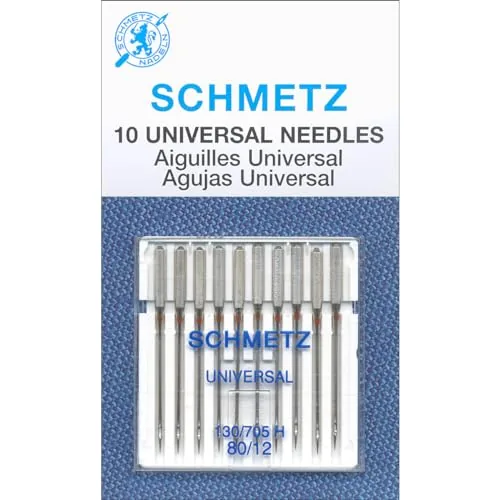
These universal household sewing machine needles handle common woven and knit fabrics. The 80/12 size works well for medium weight projects like apparel, home repairs, and general sewing. Each card includes ten needles for replacements and long term use.
Key Features
- Universal 130/705 H household sewing machine needles
- Size 80/12 for medium weight fabric sewing
- Carded pack contains ten sewing machine needles
- SCH1833 model code identifies this needle pack
- SCHMETZ manufactured needles for household sewing machines
✅ Pros
- Standard universal fit for many household machines
- Versatile 80/12 size for medium fabrics
- Ten needle pack provides useful spares
❌ Cons
- Not specialized for very heavy fabrics or leather
- Needles still need regular replacement with heavy use
Why We Chose It
This pack covers everyday sewing with a standard universal needle system and common 80/12 size. It is a practical choice for keeping spare needles in a sewing kit. The ten needle count adds value for routine projects and repairs.
Perfect For
Home sewists who need reliable medium weight needles for general garment and repair work.
How to Stop It Happening Again
- Replace the needle every 8 to 10 hours of sewing and immediately after hitting a pin or hard seam.
- Rethread the top thread with the presser raised so the thread seats fully in the tension discs.
- Clean lint from the bobbin area and feed dogs after every 2 to 3 bobbins.
- Use stabilizer or a walking foot when sewing knits, slippery fabric, or more than three layers.
Frequently Asked Questions
Rotary hooks usually move thread more smoothly and can be less likely to miss loops at higher speeds. Oscillating hooks are common on budget machines and can still sew cleanly when timed correctly, but they create more bobbin movement. For frequent stretch or fine fabrics, rotary hook designs are often easier to keep consistent.
It can be worth it if you sew knit, sheer, or slippery fabrics often, because automatic tension and consistent feed reduce one common cause of skipped stitches. Mechanical machines are cheaper and easier to service, but they require more manual dial-in. If your skipped stitches come from bent needles or poor threading, the upgrade will not fix the root issue.
Stronger torque helps push the needle and feed through thick or layered fabric without deflection, which can reduce skipped stitches. High speed is useful for production sewing, but it can magnify timing, needle, and threading problems. If you mostly sew denim, canvas, or quilts, choose torque and stable feed over top speed.
Many buyers assume skipped stitches mean the machine is defective, when the cause is often a dull, bent, or wrong-style needle. A machine that skips stitches on stretch fabric may simply need a ballpoint or stretch needle and correct threading. Replacing a working machine for this reason can waste money before basic setup is checked.
A universal needle may work on stable knits, but skipped stitches often improve after switching to a ballpoint or stretch needle. These needles have rounded or specially shaped points that slide between knit fibers instead of piercing and deflecting them. Install the needle fully with the flat side oriented to the machine's specification, then test on the same fabric.
Timing problems are often treated as wear, misuse, or service issues, so many warranties do not cover them after the initial return period. If the machine skips stitches immediately after setup, contact the seller before attempting internal timing adjustments. Regular cleaning, correct needle use, and avoiding pulling fabric can help prevent timing-related damage.
Skipped stitches are almost always fixable at the machine. Start with the needle, then threading, bobbin, and fabric feeding. Test each change on scrap before sewing the real project. If skips remain after those checks, have the hook timing inspected. Waiting can turn a simple setup problem into damaged fabric or a costly repair. A fresh needle and slow test seam solve most cases quickly in under 10 minutes at home.
Affiliate Disclosure
This post contains affiliate links. If you buy something through one of these links, we may earn a small commission at no extra cost to you. We only recommend products and services we trust. Thank you for supporting this site!
